
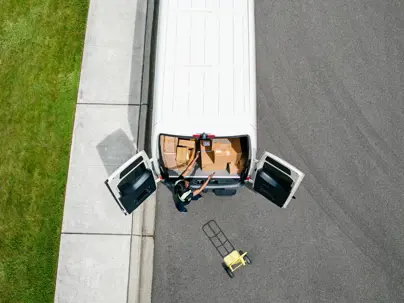
You were hit by a delivery vehicle in Texas. Then you learn the driver was an “independent contractor.” Does that mean the company whose name was on the truck cannot be held responsible?
Not necessarily.
Delivery vehicle accident claims can become complicated because companies such as Amazon, FedEx, and UPS use different business models to get packages to customers. Depending on the circumstances, the driver may be a direct employee, work for a separate delivery contractor, or operate as an independent driver.
When someone suffers serious injuries in a delivery vehicle crash, determining who is liable requires looking beyond the logo on the vehicle and investigating who controlled the work.
Who Can Be Liable for a Delivery Vehicle Accident in Texas?
The delivery driver may be the only potential defendant after a serious crash.
Depending on how the delivery operation was structured, potentially responsible parties could include the driver’s employer, a delivery service contractor, the vehicle owner, or another business that controlled the driver’s work.
Texas proportionate responsibility laws also allow fault to be divided among multiple responsible parties. That makes identifying every company connected to the crash especially important.
Questions about who established routes, monitored drivers, enforced safety requirements, controlled delivery schedules, and had the authority to remove unsafe drivers can become central to the case.
Are Amazon, FedEx, and UPS Responsible for Their Drivers?
There is no single answer because these companies operate differently.
UPS drivers are generally employees, which can make traditional employer liability an important part of a UPS accident claim.
FedEx operations can be more complicated. Some drivers are employees, while FedEx Ground routes may be operated by independent service providers. A serious FedEx truck accident may therefore require investigating both the driver’s immediate employer and FedEx’s involvement in the operation.
Amazon’s delivery network can present additional layers. Many Amazon deliveries are handled through Delivery Service Partners, while Amazon Flex drivers use their personal vehicles. Determining liability may require examining the extent of control Amazon exercised over delivery routes, apps, performance requirements, monitoring technology, and other policies.
An independent contractor agreement does not necessarily end that investigation. What matters is how the relationship actually operated and what the evidence shows.
What Evidence Matters After a Delivery Truck Accident?
Delivery companies generate significant amounts of electronic information. That evidence can help show what happened before a crash and how the driver was being managed.
Depending on the company and vehicle, important evidence may include:
- GPS and route information
- Vehicle telematics
- In-cab camera footage
- Driver safety scores
- Electronic logging data
- Delivery app records
- Driver qualification and training records
- Previous crashes or safety complaints
- Contractor performance records
Some electronic records can be overwritten or deleted. Although Texas generally provides two years to file a personal injury lawsuit, waiting to investigate a delivery vehicle crash can allow valuable evidence to disappear.
Preserving evidence early can be particularly important when a company disputes its relationship with the driver.
Can a Delivery Company Be Liable for Hiring or Keeping an Unsafe Driver?
A delivery vehicle case may involve more than the driver’s actions at the moment of the crash.
Depending on the evidence, claims can involve negligent hiring, training, supervision, retention, or entrustment. If a company knew about serious safety problems but allowed a dangerous driver to remain on the road, its own corporate decisions may become part of the case.
Hamilton Wingo understands the importance of investigating those decisions. In Goff v. Charter Communications, our trial team pursued a case involving corporate failures surrounding a field technician who murdered an 83-year-old customer. A Dallas County jury found the company 90 percent responsible and returned a $7.3 billion verdict.
That case demonstrates why corporate labels should never replace a thorough investigation into who had control, what the company knew, and what it did with that information.
Serious Delivery Vehicle Accidents Require a Deeper Investigation
When an Amazon, FedEx, UPS, or other delivery vehicle causes a catastrophic crash, the smallest available insurance policy should not automatically define the case.
The real question is who bears responsibility for putting the driver on the road and whether corporate decisions contributed to the crash.
Hamilton Wingo has experience taking on major corporate defendants and uncovering the evidence behind catastrophic injuries. If you were seriously injured in a delivery vehicle accident in Texas, Hamilton Wingo can help you understand the parties and claims that may be involved.