
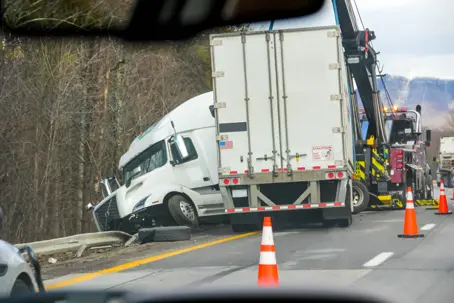
Texas continues to lead the nation in truck-related fatalities and crash frequency. According to TxDOT's 2024 annual crash report, the state recorded 4,150 total motor vehicle fatalities, with commercial motor vehicles accounting for approximately 664 fatal crashes. The data below breaks down Texas truck accident statistics by crash type, highway corridor, contributing factors, and year-over-year trends.
Texas Commercial Truck Accidents By the Numbers
Texas Truck Accident Statistics – 2024 | |
Total crashes involving large trucks | 18,834 |
Total vehicles involved | 20,511 |
Total fatalities | 712 |
Total injuries | 11,026 |
FMCSA data shows Texas experienced 18,834 large truck crashes in 2024, with 645 fatal crashes resulting in 712 deaths. 2025 data is still being processed, but preliminary results show 17,690 large truck crashes, with 518 fatal crashes resulting in 579 deaths.
Texas Truck Accident Statistics Over Time
Metric | 2022 | 2023 | 2024 | 2025* | 2026 (Q1)* |
Total Large Truck Crashes | 19,686 | 19,677 | 18,834 | 17,690 | 2,321 |
Fatal Crashes | 750 | 705 | 645 | 518 | 70 |
Fatalities | 871 | 793 | 712 | 579 | 78 |
Total Injuries | 10,750 | 11,467 | 11,026 | 10,476 | 1,338 |
Source; *preliminary data
Texas saw a 19.7% decrease in fatal truck accidents from 2022 to 2024, declining from 750 to 645 incidents. This downward trend continued into 2025*, with 518 fatal crashes recorded; a 19.7% reduction from the previous year.
While fatal crashes declined, injury crashes remained relatively stable, hovering between 18,000 and 19,000 annually. This suggests that while fewer crashes result in death, the overall frequency of serious truck accidents remains persistently and perilously high.
Texas Leads the Nation in Truck Crash Fatalities
Texas continues to hold the unfortunate distinction of leading all U.S. states in truck accident deaths. According to the National Safety Council analysis of NHTSA's FARS data, Texas recorded 645 deaths from large truck crashes in 2024, significantly higher than the second-highest state, California, which recorded 370 deaths.
Rank | State | 2024 Deaths from Truck Crashes |
1 | Texas | 645 |
2 | California | 370 |
3 | Florida | 271 |
4 | Georgia | 176 |
5 | Pennsylvania | 150 |
This disproportionate toll reflects the massive commercial trucking infrastructure in Texas, the state’s extensive interstate highway system, and high-volume oilfield operations in West Texas. As a border state with Mexico and a critical link in the NAFTA/USMCA trade corridor, Texas serves as the primary entry point for cross-border freight, with thousands of commercial vehicles crossing daily through ports of entry in Laredo, El Paso, and other border cities.
Additionally, the state's booming economy and central geographic position make it a major distribution hub for e-commerce and logistics companies, placing unprecedented strain on highways that now handle both traditional freight and the rapid expansion of last-mile delivery trucking.
The Deadliest Texas Highways and Regions for Truck Accidents
Texas's major interstate corridors (particularly I-35, I-10, I-20, and I-45) experience the highest concentration of commercial truck crashes. Analysis of 2025 crash data reveals specific metro areas and highway segments where truck accidents occur most frequently, as seen in the county-level data:
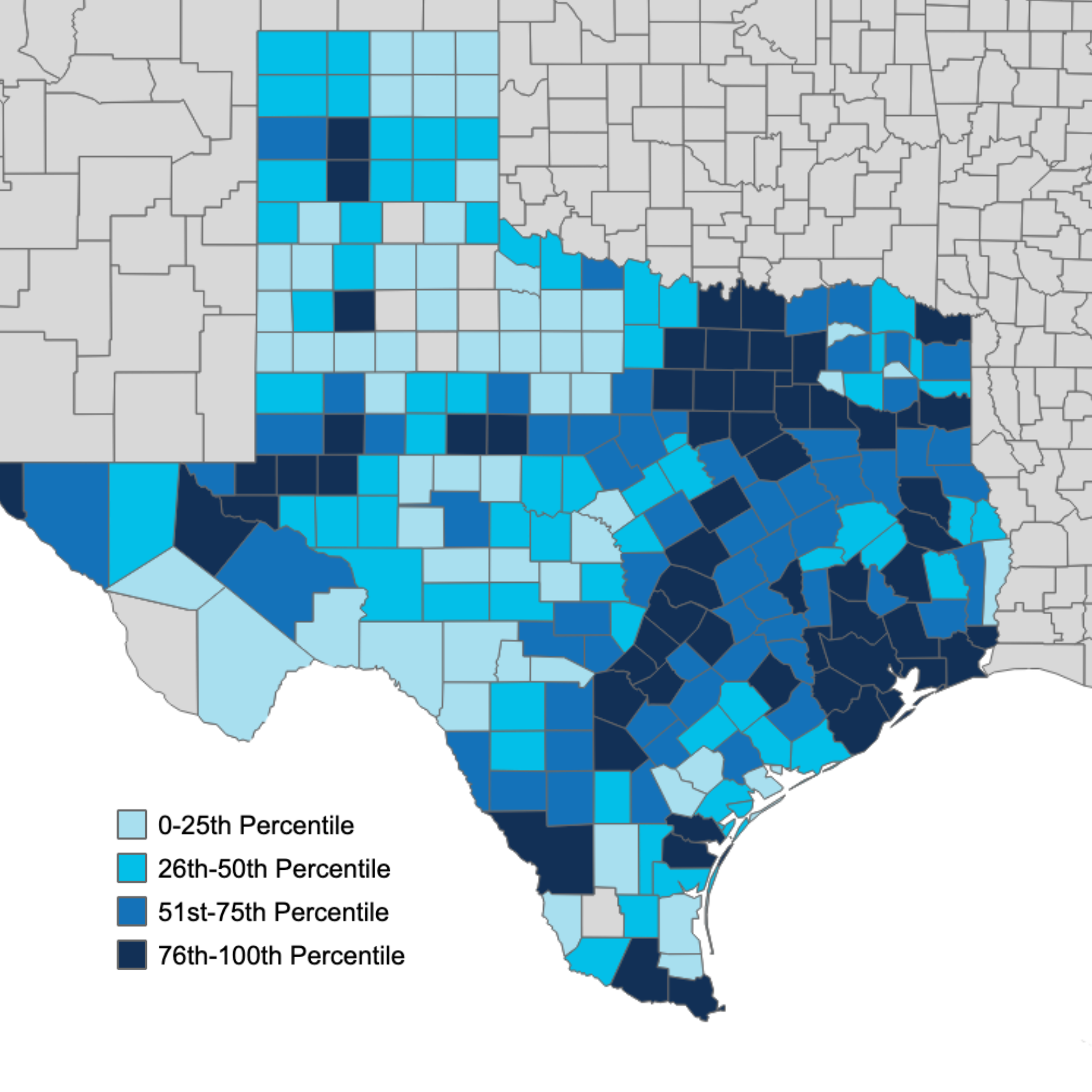
These concentrations underscore the correlation between population density, interstate traffic volume, and commercial trucking activity. Houston's Harris County alone accounts for over 4,000 truck crashes annually, more than double the next-highest county.
I-35: 400 Miles of High-Risk Trucking Corridor
Interstate 35 stretches 400 miles across Texas, connecting major metros from Laredo through San Antonio, Austin, Waco, and into the Dallas-Fort Worth area. FMCSA data indicates I-35 recorded 290 fatalities over a recent five-year period, making it one of the most dangerous highways in Texas for all vehicle types.
The I-35 corridor sees particularly heavy truck traffic as a primary north-south freight route connecting Mexico to the central United States. High traffic volume, frequent construction zones, and mixed passenger and commercial vehicle flow create conditions for serious crashes.
I-20: Oilfield Truck Traffic and Rural Fatalities
Interstate 20 runs east-west through Texas, passing through the Permian Basin oil production region near Midland-Odessa. The Permian Basin's narrow rural highways were never designed to handle the massive volume of heavy trucks required for modern oil production. As a result, counties in this region show some of the highest injury-to-crash ratios in the state.
Common Causes of Texas Truck Accidents
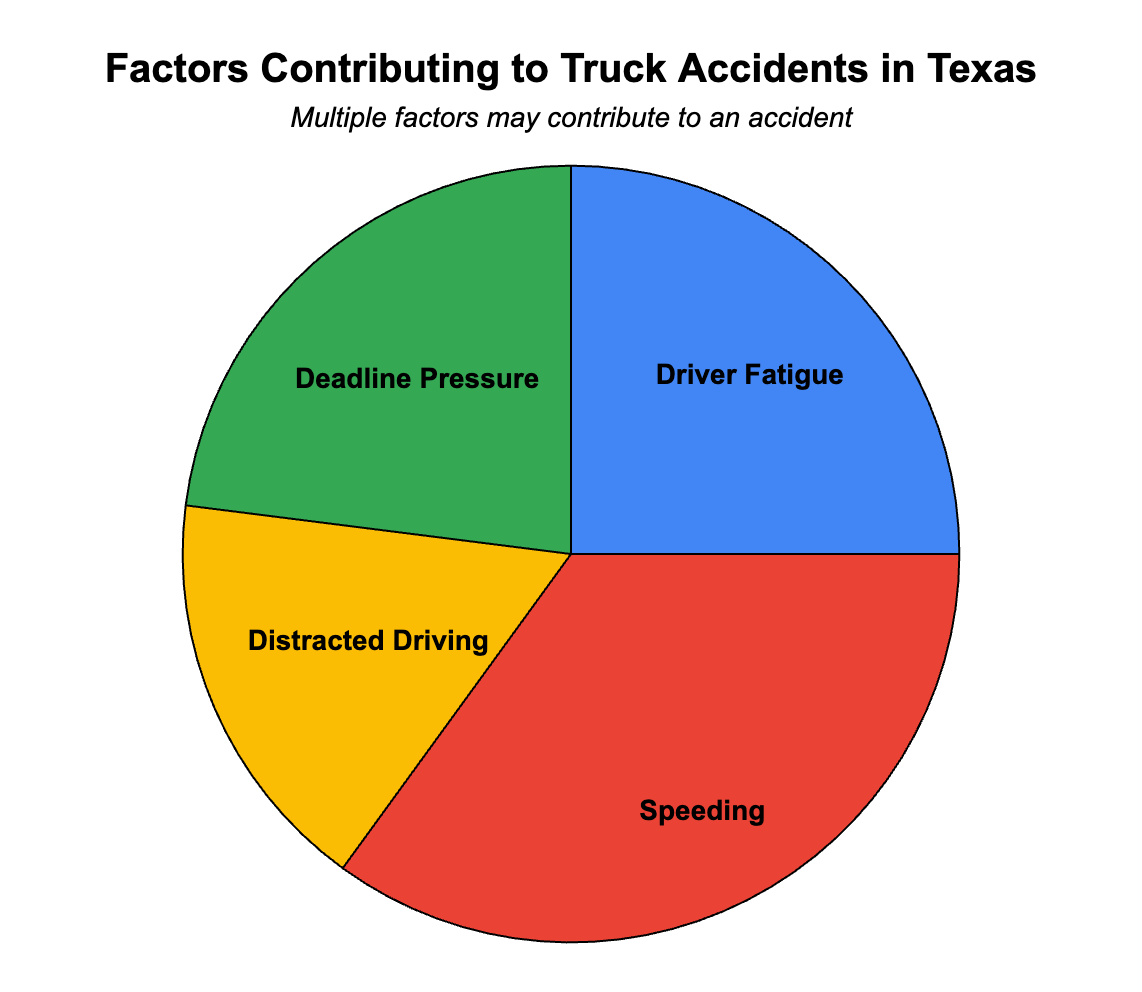
Texas truck crashes stem from identifiable, preventable causes rooted in corporate pressure to meet deadlines, inadequate driver training, and insufficient vehicle maintenance. Analysis of FMCSA 2025 crash data reveals the following contributing factors:
Driver Fatigue and Hours-of-Service Violations
2,747 crashes occurred between midnight and 6:00 a.m. in 2025; the hours when fatigue-related impairment mirrors the effects of drunk driving. Fatigued truck drivers experience delayed reaction times, lane drifting, and impaired hazard recognition.
Federal Hours of Service (HOS) regulations limit truck drivers to 11 hours of driving within a 14-hour on-duty window, with mandatory rest periods. However, enforcement of these rules has declined sharply. WFAA investigative analysis found that FMCSA closed 3,843 enforcement cases in 2024 but only 617 in 2025, representing an 84% decline in safety enforcement actions.
Speeding and Failure to Control Speed
Texas recorded 3,475 speed-related truck crashes in 2025. When a fully loaded 80,000-pound commercial truck travels too fast, the driver cannot stop or slow down in time when traffic conditions change. Speed-related crashes frequently result in jackknifing, multi-vehicle pileups, and loss of control on highway ramps.
Distracted Driving
2,612 distraction-related truck crashes occurred in 2025, 302 of which were fatal. Distractions include cell phone use, in-cab technology, eating, and external factors like billboards. A momentary lapse of attention in an 80-ton vehicle traveling at highway speed can result in devastating impacts.
Intersection-Related Crashes and Deadline Pressure
Texas saw 13,703 intersection-related crashes in 2025 involving commercial motor vehicles. Many of these crashes stem from trucking companies imposing unrealistic delivery schedules and pressuring drivers to speed through yellow and red lights, run stop signs, and follow other vehicles too closely. Additionally, 4,948 work zone crashes involving commercial motor vehicles occurred, typically resulting from drivers failing to reduce speed, follow flaggers, or stop in time for construction equipment and workers.
When Truck Crash Statistics Become Personal Tragedies
It’s easy to view 18,834 crashes and 712 fatalities as Texas truck accident statistics, but behind every number is a Texas family facing unimaginable loss, a victim enduring months or years of painful recovery, or a breadwinner unable to return to work.
As federal trucking safety enforcement has plummeted 84% and unsafe carriers remain on the road despite chronic violations, accountability increasingly depends on civil litigation. When companies prioritize speed over safety, neglect maintenance, or hire unqualified drivers, victims have legal recourse.
Hamilton Wingo has recovered over $10 billion and has built a reputation for holding negligent trucking companies accountable. If you or a loved one was injured or killed in a Texas truck accident, contact Hamilton Wingo today for a free, confidential consultation. You pay no legal fees unless we secure compensation for you.